Understanding Domestic Violence and Abuse: Controlling and Abusive Behaviors
“Domestic violence and abuse is defined here as “any act of violence or abuse that causes physical, sexual, or psychological harm, perpetrated by any household or family member against another individual in the household.” (WHO, 2021).
Perpetrator: a person who uses any form of violence against a victim/survivor
A victim/survivor is a person who has experienced, or is currently experiencing, domestic and family violence, sexual violence, and/or coercive control.
Note: Domestic violence can affect all members of a family, including spouses, children, and other relatives. However, women are disproportionately affected and are more frequently victims of domestic violence.
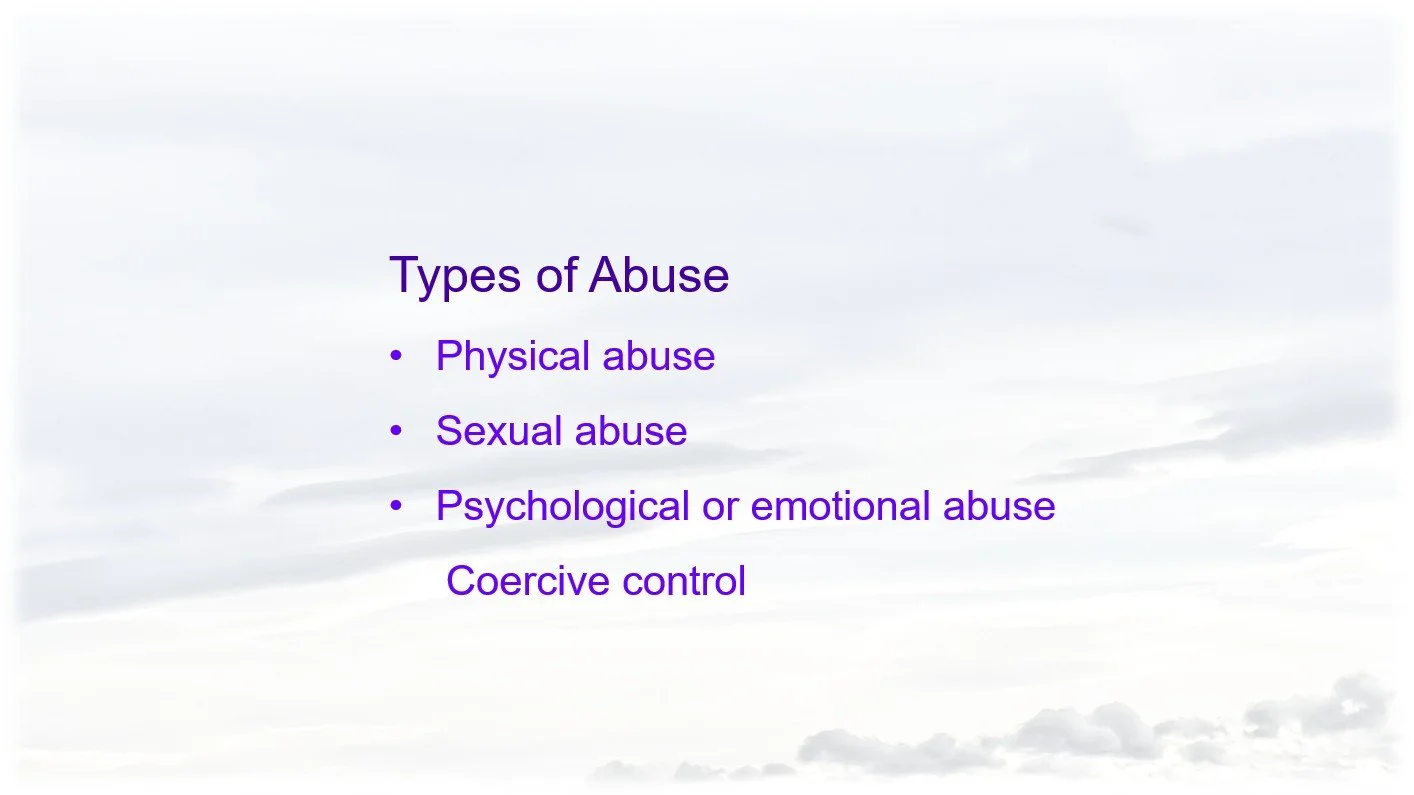
Domestic violence and abuse include physical violence, sexual violence, psychological abuse, and controlling behaviors.
Coercive control is a form of psychological abuse in which one partner uses fear, intimidation, manipulation, and control to dominate the other within an intimate relationship.
The most common controlling and abusive behaviors and tactics:
Verbal abuse and insults: Using repeated insults, shouting, yelling, or verbal abuse to intimidate a partner and make them feel ashamed, belittled, or humiliated.
Jealousy and suspicious about friends, family and social connections, falsely accusing the partner of having an affair or checking their wallet, purse, cell phone, or call history.
Excessive monitoring of their whereabouts: Tracking or monitoring a partner’s location, activities, or movements, including stalking.
Isolation: Isolating a partner from family members, friends, and other sources of support; controlling or restricting their use of technology, such as phones, internet access, or transportation; and preventing them from contacting loved ones or maintaining supportive relationships.
Harassing a partner: Using repeated phone calls, messages, or electronic communication to harass a partner, criticize them, make false accusations, or question them about where they are and what they are doing.
Using a victim/survivor’s past trauma or personal disclosures against them to cause shame, humiliation, isolation or emotional distress.
Threatens to hurt partner: Threatening to hurt a partner, including making gestures or actions that suggest the perpetrator is about to hit the victim/survivor, even if physical contact does not occur.
Physical abuse: Use of physical force that causes harm or injury, including beating, stabbing, shooting, hitting with an object, or other violent acts that may result in serious injury or death.
Financial abuse: Making a victim/survivor economically dependent on the abuser by controlling all income, excluding them from financial decisions, misusing family finances, withholding financial information, refusing to pay bills, or denying money for household necessities.
This may also include forcing the victim/survivor out of the home, damaging or stealing property, taking money or identification documents, creating debt through coercion or secrecy, damaging the victim/survivor’s credit, restricting access to the family car, limiting access to health care or insurance, or taking the victim/survivor’s earnings against their will.
Employment sabotage – Restricting a partner’s ability to work, earn money, pursue education, or maintain employment. This may include preventing them from getting a job, harassing them at work, causing them to miss work, or interfering with their ability to keep or obtain employment.
Sabotage parent child relationship”
Manipulating children into believing that one parent is responsible for the family’s problems.
Interfering with or damaging the relationship between a parent and child in order to reduce the parent’s authority, confidence, and influence in caregiving and decision-making.
Make false accusations to intimidate, control or harm a partner

Intimate partner violence can affect people of all genders.
Research suggests that both men and women may use physical aggression, emotional abuse, and control behaviors.
Men perpetrate most of the sexual violence, and their physical assaults are more likely to result in serious injury.
References:
1. Boxall, H., & Morgan, A. (2021). Who is most at risk of physical and sexual partner violence and coercive control during the COVID-19 pandemic?. Trends and Issues in Crime and Criminal Justice, (618), 1-19.
2. Hughes, K., Bellis, M. A., Hardcastle, K. A., Sethi, D., Butchart, A., Mikton, C., ... & Dunne, M. P. (2017). The effect of multiple adverse childhood experiences on health: a systematic review and meta-analysis. The Lancet public health, 2(8), e356-e366.
3. Kar, H. L. (2018). Acknowledging the victim to perpetrator trajectory: Integrating a mental health focused trauma-based approach into global violence programs. Aggression and Violent Behavior, 47, 293–297
4. Kassing, K., & Collins, A. (2026). “Slowly, over time, you completely lose yourself”: Conceptualizing coercive control trauma in intimate partner relationships. Journal of Interpersonal Violence, 41(3-4), 662-684.
5. McMahon, M., McGorrery, P., & Burton, K. (2020). An alternative means of prosecuting non-physical domestic abuse: are stalking laws an under-utilised resource?. In Criminalising coercive control: family violence and the criminal law (pp. 93-110). Singapore: Springer Singapore.
6. Pirkis, J., Bantjes, J., Dandona, R., Knipe, D., Pitman, A., Robinson, J., ... & Hawton, K. (2024). Addressing key risk factors for suicide at a societal level. The Lancet Public Health, 9(10), e816-e824.
7. World Health Organization. (2021). Violence against women prevalence estimates, 2018: global, regional and national prevalence estimates for intimate partner violence against women and global and regional prevalence estimates for non-partner sexual violence against women. World Health Organization.
