Becoming “yourself”, healthy again
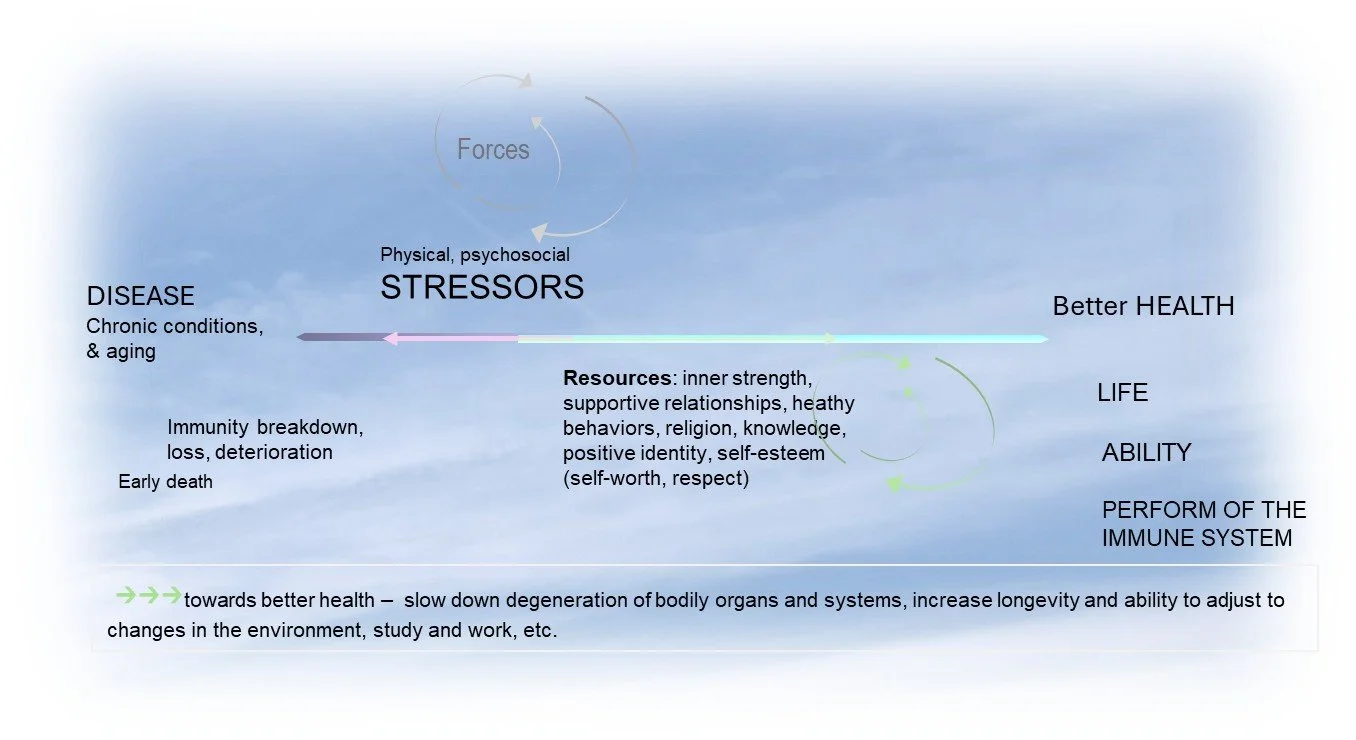
What causes some of us to be afraid, insecure, withdrawn and/or isolated from others; feel insecure, lonely, hopeless, and empty?
Feelings of emptiness, loneliness, and helplessness arise when we neglect our needs.
Ignorance - A lack of knowledge about who you are, what you are, where you are, and where you're going can lead to anxiety and depression.
Abuse and violence (domestic violence, child abuse, and bullying) can cause psychological insecurity but also damage the stress response system, increase anxiety and stress hormones, weaken the immune system and the body's ability to repair itself, and depress mood over time.
Trauma can undermine hope and cause individuals to perceive themselves as inadequate, incompetent, unwanted, unacceptable, unimportant, unworthy, or damaged.
A negative self-talk discourages an individual and causes inner conflict.
How to overcome mental barriers, nurture our spirit, increase energy and strength.
Start by spending time alone. Communicate with yourself. Every now and then, take a moment to think about yourself and write about it.
Set aside 20 to 40 minutes each week for self-reflection. Examine your thoughts about yourself.
Look at your past experiences, learn about yourself, and let go of your false beliefs
Change the way you talk to yourself.
Listen to your inner voice and follow your intuition
Build a healthy relationship with yourself
Reference:
Dhar N, Chaturvedi S, Nandan D. Spiritual health scale 2011: defining and measuring 4 dimension of health. Indian J Community Med. 2011 Oct;36(4):275-82. doi: 10.4103/0970-0218.91329. PMID: 22279257; PMCID: PMC3263147.
Lucchetti G, Koenig HG, Lucchetti ALG. Spirituality, religiousness, and mental health: A review of the current scientific evidence. World J Clin Cases. 2021 Sep 16;9(26):7620-7631. doi: 10.12998/wjcc.v9.i26.7620. PMID: 34621814; PMCID: PMC8462234.
